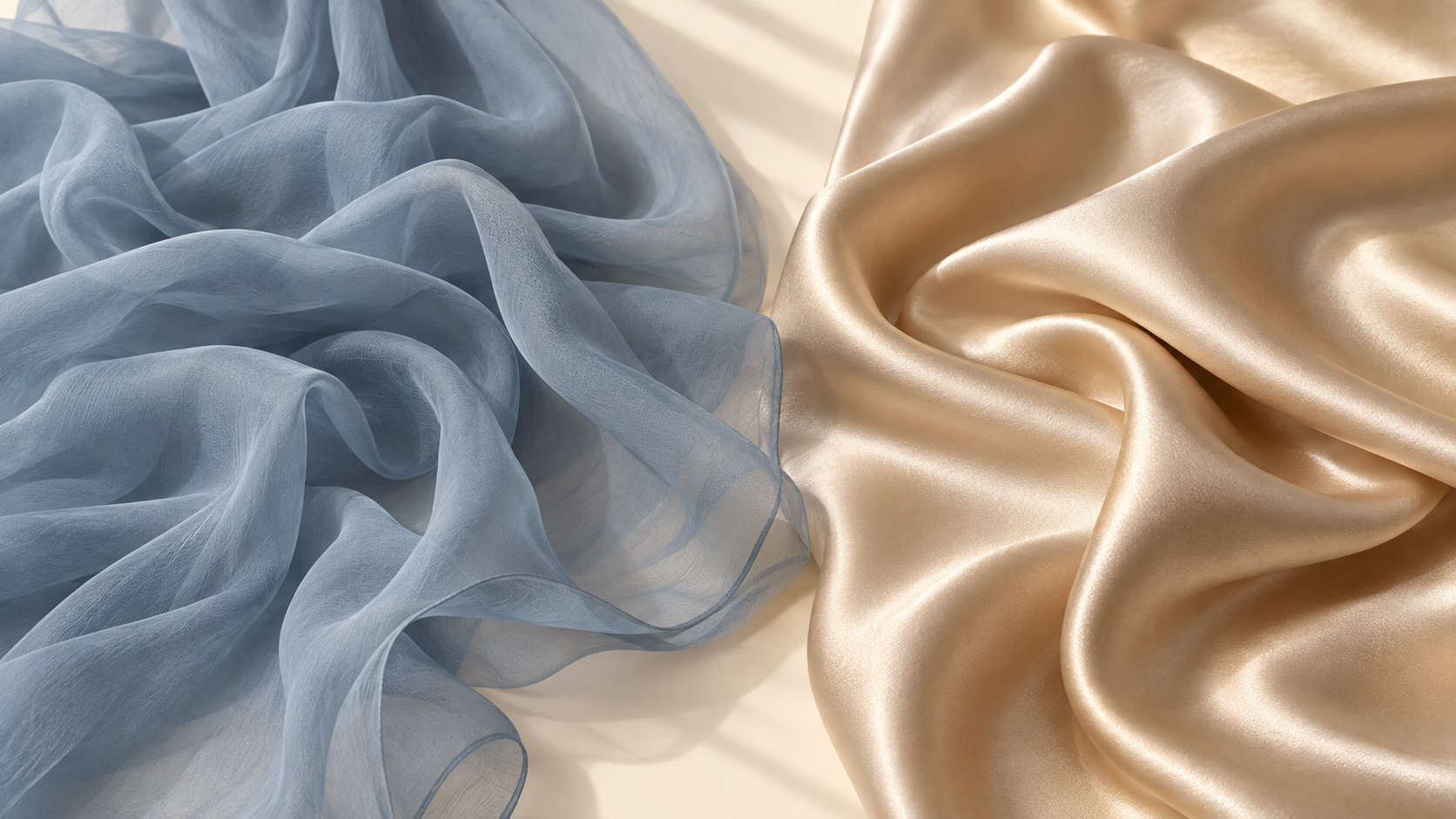
Chiffon and satin can both create an elegant occasion dress, but they communicate that elegance in very different ways. Chiffon is known for airy movement and a soft surface, while satin is recognized for smooth luster and a more polished presence.
Chiffon at a glance
Chiffon is a lightweight, sheer woven fabric, so dresses are normally made with layers and lining. Its slightly textured surface diffuses light instead of reflecting it strongly. The result feels soft, fluid and graceful in motion.
Chiffon is often chosen for bridesmaid dresses, destination celebrations, outdoor weddings and flowing evening silhouettes. Draped bodices, flutter sleeves and full skirts show its movement especially well.
Satin at a glance
Satin describes a weave with a smooth, light-reflective face. Depending on its fiber, weight and construction, it can range from soft and fluid to substantial and structured. Its highlights make color look rich and dimensional.
Satin works beautifully for formal receptions, evening events, minimalist gowns and silhouettes that rely on clean lines. Cowl necklines, bias cuts and structured skirts can all use its surface to dramatic effect.
Chiffon vs. satin: the practical differences
| Feature | Chiffon | Satin |
|---|---|---|
| Surface | Soft and matte | Smooth and luminous |
| Movement | Airy and flowing | Fluid to structured, depending on weight |
| Visual mood | Romantic and light | Polished and dramatic |
| Photography | Color looks softly diffused | Highlights emphasize folds and curves |
Which fabric feels better for the season?
For warm or humid settings, lightweight chiffon can feel visually and physically airy, although lining and the full dress construction still affect comfort. Satin is not automatically a cold-weather fabric: a lighter satin can work across seasons, while heavier versions feel especially suited to cool evenings and formal indoor spaces.
Think about more than the calendar. Air-conditioning, wind, direct sun and the amount of time spent outdoors will have a greater effect on comfort than a simple seasonal label.
Which fabric suits your silhouette?
Chiffon layers skim the body and create motion, making the fabric a natural partner for A-line skirts, gathered waists and soft sleeves. Satin reveals the architecture of a dress more clearly, so seams, draping and fit become part of the look.
If you prefer subtle texture and less shine, chiffon may feel more natural. If you love a sleek finish and want the fabric to catch evening light, satin may be the better match.
How color changes between chiffon and satin
The same named color can appear quieter in chiffon and more saturated in satin. Layering can also deepen chiffon, while satin's reflective surface creates bright highlights and darker folds. This is why matching color names alone is not enough when coordinating a wedding party.
Compare fabric swatches in daylight, indoor lighting and phone-camera photographs before making a final group decision.
Care and event-day practicality
Both fabrics deserve gentle handling. Chiffon can catch on rough jewelry or textured surfaces, while satin can show pressure marks, water spots or creases depending on its construction. Follow the care label for the finished dress rather than relying on a general fabric rule.
When traveling, give the dress space, use a garment bag and allow time for wrinkles to relax. If steaming is permitted by the care instructions, test from a safe distance in an inconspicuous area first.
Choose chiffon if…
- You want soft movement and an airy appearance.
- Your event has a romantic, garden or destination mood.
- You prefer a diffused, low-shine surface.
Choose satin if…
- You want a smooth surface with luminous highlights.
- Your style is polished, minimal or dramatic.
- You want draping or structure to be a visible part of the design.
There is no universal winner—the right fabric is the one that supports the silhouette, setting and feeling you want. Browse formal and evening dresses and compare how each fabric brings a different kind of elegance.